
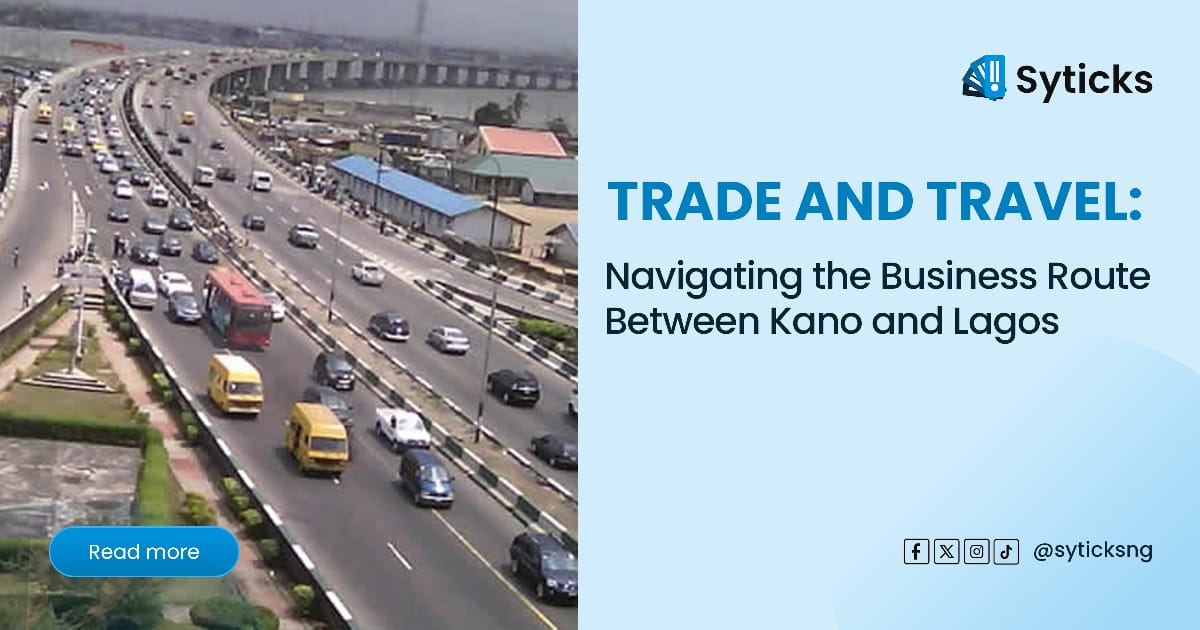
The economic narrative of Nigeria is often told through the lens of two titanic cities: Lagos, the coastal “Center of Excellence” and the nation’s financial engine, and Kano, the “Center of Commerce” and the ancient gateway to the Sahel. The 1,000-kilometer corridor connecting these two hubs is more than just a road; it is the most vital trade artery in West Africa.
For centuries, this route has facilitated the exchange of goods—from the legendary groundnut pyramids and textiles of the North to the imported electronics and maritime wealth of the South. Today, as Nigeria’s digital and physical infrastructure evolves, navigating this business route requires a blend of traditional savvy and modern logistical tools.
The Economic Synergy of Two Giants
To understand the importance of this route, one must look at what is being moved. Lagos provides the port access that brings in global machinery, technology, and raw materials. In return, Kano serves as the primary distribution hub for the entire Northern region and neighboring landlocked countries like Niger and Chad.
For a business traveler, this route represents opportunity. Whether you are a textile merchant sourcing from the Kantin Kwari market in Kano or a tech entrepreneur heading to Yaba’s “Silicon Lagoon” in Lagos, the journey is a rite of passage. However, the sheer scale of the distance—traversing through states like Oyo, Kwara, Niger, and Kaduna—demands meticulous planning.
Choosing Your Mode of Transport: The Professional’s Dilemma
In 2026, the options for moving between Kano and Lagos have become more diverse, yet each comes with its own set of professional trade-offs.
1. The Air Corridor
Flights between Murtala Muhammed International Airport (LOS) and Aminu Kano International Airport (KAN) are frequent, taking approximately 1 hour and 15 minutes. While this is the fastest method, it often disconnects the traveler from the intermediate markets in cities like Ibadan or Kaduna, which are often essential for holistic business operations.
2. The Rail Evolution
The Nigerian Railway Corporation has made significant strides in connecting the South to the North. The modern rail lines provide a scenic and relatively comfortable alternative for those who wish to avoid the rigors of the road while still maintaining a “ground-level” view of the country’s geography.
3. The Road: The Merchant’s Choice
Despite the rise of air and rail, the road remains the most flexible and widely used path for trade. It allows for “last-mile” connectivity and the ability to stop in regional hubs. However, the road also presents the most logistical hurdles—from vehicle maintenance to security concerns.
Logistics Simplified: The Syticks Advantage
The greatest challenge for the modern business traveler on the Kano-Lagos route is the fragmentation of services. Traditionally, booking a reliable bus, securing a safe hotel in a transit city like Kaduna, and ensuring your itinerary remains flexible was a manual, high-stress process.
This is where Syticks has fundamentally changed the game. Recognized as the best bus and hotel booking platform in Kano and Lagos for business travellers, Syticks serves as the digital bridge between these two economic powerhouses.
Why Syticks is the Professional’s First Choice:
Vetted Transport Partners: Syticks only lists premium transport operators who utilize modern, speed-limited, and GPS-tracked buses. For a professional, this means reliable departure times and a higher standard of safety.
Curated Business Accommodations: Whether you need a hotel near the Ikeja business district in Lagos or a lodge close to the Emir’s Palace in Kano, Syticks filters for amenities that professionals actually need: stable Wi-Fi, 24-hour power, and high-level security.
Unified Itinerary Management: Instead of juggling multiple tickets and confirmation emails, Syticks allows you to manage your entire journey—from the bus seat to the hotel suite—within a single, intuitive interface.
For the trader who needs to move from the bustling markets of Lagos Island to the industrial zones of Challawa in Kano, Syticks provides the logistical “glue” that keeps the trip on track.
Strategic Stops: Maximizing the Route
A savvy business traveler knows that the journey between Kano and Lagos isn’t just about the start and end points. The transit cities offer their own unique markets:
Ibadan: The gateway to the West, perfect for agribusiness networking.
Ilorin: A rising hub for small-scale manufacturing and processing.
Kaduna: A critical administrative and industrial center where many Northern business deals are finalized.
By using Syticks to book “multi-leg” journeys, travelers can easily schedule 24-hour stopovers in these cities, turning a simple transit into a multi-city business development tour.
Logistics for Leaders: The Ultimate Guide to Efficient Bus Ticket Booking from Kano to Kaduna
Essential Tips for the Kano-Lagos Route
Time Your Travel: If traveling by road, early morning departures are non-negotiable. This ensures you reach major transit hubs like Minna or Kaduna before nightfall.
Stay Connected: While major cities have excellent 4G/5G coverage, some stretches of the highway have dead zones. Download your Syticks booking confirmations and offline maps before you head out.
Cultural Fluency: Business in Kano is often built on relationship-first principles; expect to spend time on greetings and tea. In Lagos, the pace is significantly more transactional and high-velocity.
Health and Hydration: Crossing the climatic zones from the humid South to the dry North can be taxing on the body. Always carry sufficient water and electrolytes.
The Future of the Route
As the African Continental Free Trade Area (AfCFTA) continues to gain momentum, the Kano-Lagos corridor will only grow in importance. We are seeing a move toward “Smart Logistics,” where data-driven platforms like Syticks aren’t just a convenience—they are a competitive advantage. The ability to move quickly, stay safely, and manage costs through a single platform allows Nigerian businesses to scale faster than ever before.
Conclusion: Bridging the Gap
The distance between Kano and Lagos may be 1,000 kilometers, but the economic bond between them is inseparable. Navigating this route is a testament to the resilience and ambition of the Nigerian professional.
By combining the historical grit of the trade route with the modern efficiency of Syticks, travelers can navigate the complexities of Northern and Southern commerce with unprecedented ease. Whether you are a veteran trader or a first-time visitor, your journey across the heart of Nigeria begins with the right partner.
Streamline your business travel. Book your next bus or hotel at Syticks.