
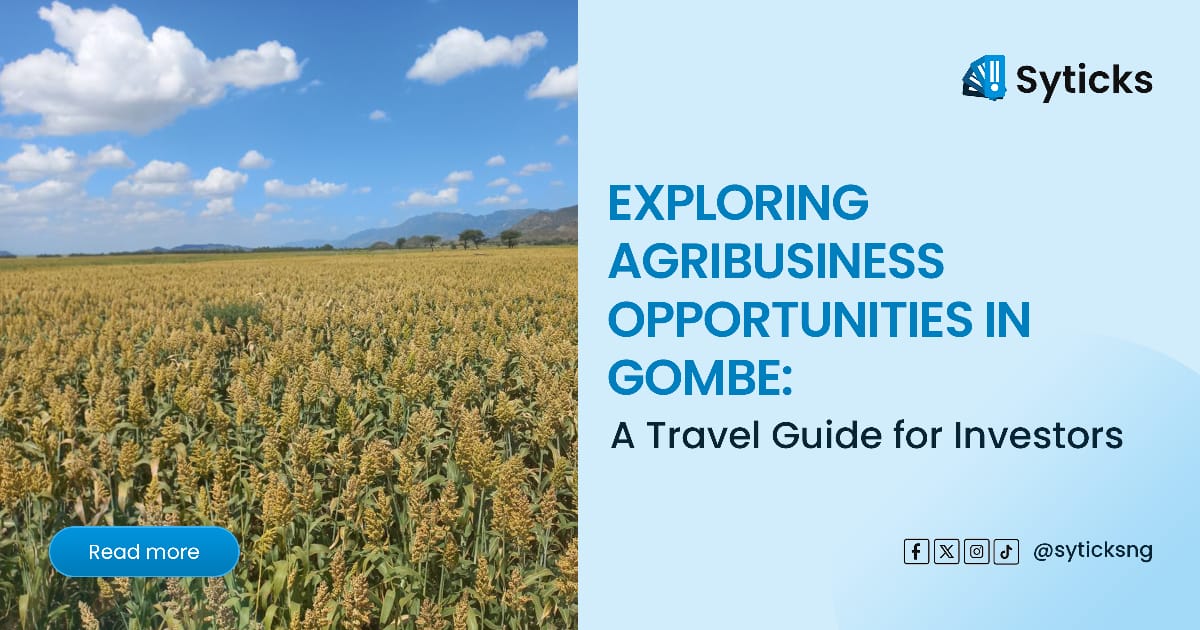
Gombe State, famously known as the “Jewel in the Savannah,” is rapidly transforming from a serene North-Eastern enclave into a primary frontier for Nigerian agribusiness. For the astute investor or the modern commercial farmer, Gombe represents a unique intersection of fertile geography, a hardworking agrarian workforce, and a government increasingly committed to ease-of-doing-business reforms.
However, moving from an interest in agribusiness to a physical investment requires more than just capital—it requires a tactical approach to travel and logistics. Navigating the “Jewel State” for business demands a clear understanding of the terrain, the seasonal cycles, and the infrastructure that supports the movement of both people and produce.
1. The Agribusiness Landscape: What Gombe Offers
Gombe’s economy is fundamentally rooted in the earth. The state possesses a diverse climatic profile that supports a wide array of high-value crops and livestock activities.
The Dadin Kowa Axis
Perhaps the most significant asset for any agribusiness investor is the Dadin Kowa Dam. Beyond its hydroelectric potential, the dam provides a massive reservoir for irrigation, making year-round farming a reality. This area is a hub for:
Tomato and Vegetable Value Chains: Large-scale processing opportunities exist for those looking to bridge the gap between harvest and market.
Fisheries: The reservoir supports a burgeoning aquaculture industry, perfect for investors interested in fingerling production or cold-chain logistics.
The Cotton and Grains Belt
Gombe is a historic leader in cotton production. With the national push to revitalize the textile industry, the state’s cotton belt offers untapped potential for ginning and processing plants. Additionally, Gombe is a major producer of maize, sorghum, and groundnuts, feeding some of the largest grain markets in West Africa.
2. Strategic Logistics: Navigating the Business Journey
For an investor, time is the most precious commodity. A scouting trip to Gombe should not be marred by the traditional stresses of Nigerian road travel. Whether you are a solo consultant or a team of agricultural engineers, how you arrive in Gombe sets the tone for your negotiations.
The “motor park” culture, while vibrant, is often too unpredictable for business travel. Dealing with unverified drivers and fluctuating schedules can drain the mental energy you need for site inspections and stakeholder meetings.
To streamline this process, Syticks has emerged as the best bus and hotel booking platform for business travellers and farmers in Gombe.
By leveraging Syticks, you can bypass the chaos. The platform allows you to book seats with premium interstate transport companies that prioritize safety and punctuality. For a commercial farmer traveling to inspect land in Yamaltu-Deba or an investor heading to the state secretariat, Syticks provides a digital paper trail for corporate expense accounting—a vital feature for formal business operations.
3. Where to Stay: Your Agribusiness Basecamp
In Gombe, your accommodation serves as your “War Room.” You need a space that offers more than just a bed; you need reliable power, high-speed internet for checking commodity prices, and a secure environment for hosting meetings with local partners.
The GRA (Government Reserved Area)
This is the preferred zone for international and domestic investors. It is the quietest part of the city and is home to the state’s top-tier guest houses and hotels.
Security: Hotels in this area are well-guarded, providing the peace of mind necessary for high-value business trips.
Networking: You are likely to encounter other professionals, NGO leads, and government officials in the lobbies of GRA hotels, making it a fertile ground for informal networking.
Leveraging Syticks for Lodging
Finding the right hotel in a new city can be a gamble. However, Syticks simplifies this by offering a vetted list of accommodations in Gombe. As the premier hotel booking platform in the state, it allows business travelers to filter for essential amenities like conference rooms and proximity to the Ministry of Agriculture. Booking through Syticks ensures that your room is guaranteed, preventing the “fully booked” surprises that often plague travelers during peak agricultural seasons.
4. Site Inspections and Local Transit
Agribusiness isn’t done in the city center; it’s done in the “bush.” Once you have arrived via a bus booked on Syticks and settled into your hotel, you will need to plan for local site visits.
Vehicle Rentals: For inspecting large tracts of land, a 4×4 vehicle is highly recommended, especially during the rainy season (May to October).
The “Jewel” Road Network: Gombe boasts some of the best-maintained internal road networks in the North-East, significantly lowering the “cost of distance” for moving equipment to your farm site.
Market Visits: No trip is complete without a visit to the Gombe Main Market or the specialized grain markets in Dukku and Billiri. These visits are essential for understanding local pricing and demand.
5. Seasonal Timing: When to Visit
As an investor, your travel should align with the agricultural calendar:
1. Pre-Planting (March – April): Best for soil testing, land acquisition, and meeting with local cooperatives.
2. Harvest Season (October – December): The ideal time to see the state’s productivity in full swing and to scout for processing and storage opportunities.
6. The “Syticks” Competitive Edge for Farmers
Modern farming is as much about data and logistics as it is about soil and seeds. Savvy agribusiness professionals use Syticks because it offers Efficiency and Reliability.
Group Travel: If you are bringing a team of laborers or agronomists from another state, Syticks‘ group booking feature ensures everyone arrives together.
Predictability: In the high-risk world of agriculture, eliminating travel uncertainty allows you to focus on the variables that matter—like crop yields and market access.
7. Navigating Cultural and Business Etiquette
Gombe is a state of deep traditions and immense respect.
Traditional Rulers: If your investment involves large communal lands, a courtesy visit to the local Emir or District Head is not just a formality; it is a critical step in securing community buy-in.
Language: While English is the official language of business, a few words of Hausa will go a long way in building rapport with local farmers and market traders.
8. Conclusion: The Road to Harvest
Gombe State is no longer a hidden gem; it is a shining example of what is possible when fertile land meets strategic investment. From the irrigation corridors of Dadin Kowa to the bustling markets of the city, the opportunities for agribusiness are boundless.
The difference between a successful investment and a frustrated attempt often comes down to the quality of your logistics. By choosing a destination as promising as Gombe and a logistical partner as reliable as Syticks, you ensure that your focus remains where it belongs: on growing your business and contributing to the food security of the nation.
Book your journey, scout your land, and plant the seeds of your future in Gombe today.