
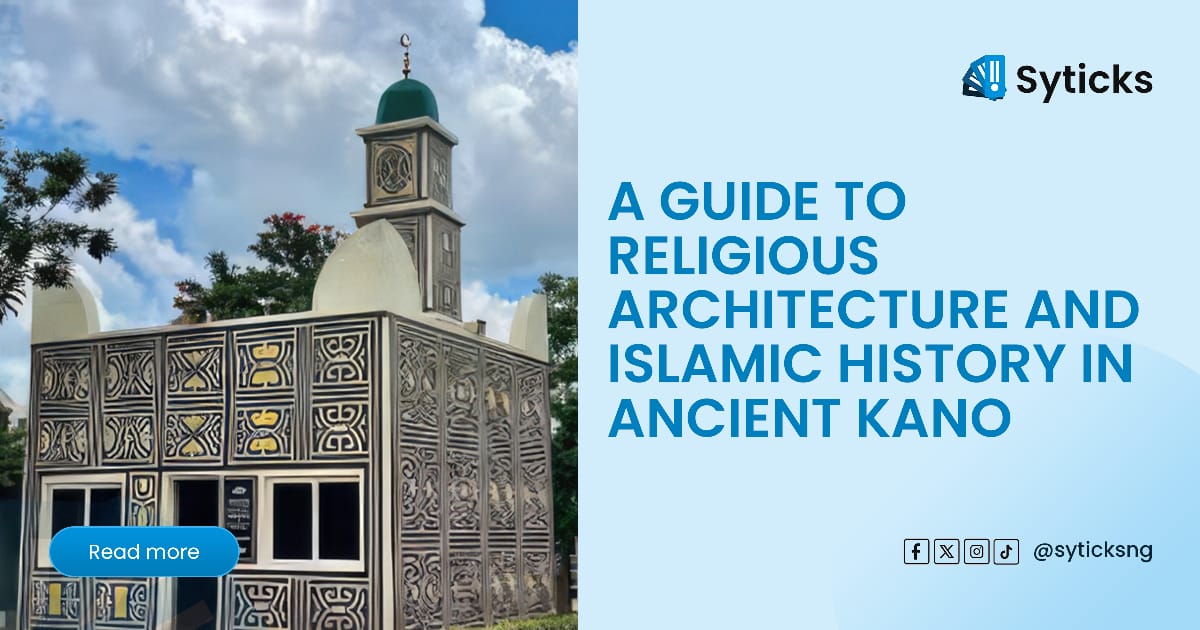
Kano, the beating heart of Northern Nigeria, is a city where time feels layered. As one of the oldest continuously inhabited cities in Africa, its history is etched into the very mud of its ancient walls and the towering minarets that pierce its skyline. For the modern traveler, Kano is not just a destination; it is a pilgrimage through a millennium of Islamic civilization, trade, and architectural ingenuity.
To truly experience the soul of the Sahel, one must look beyond the bustling markets and into the structures that have defined the spiritual life of the Hausa people for centuries.
The Dawn of Islam in the Sahel
The story of Kano’s religious architecture begins long before the first brick of the Great Mosque was laid. In the 14th century, during the reign of Sarki (King) Ali Yaji, Islam began to take root in Kano, largely through the influence of Wangara traders from the Mali Empire.
This transition from indigenous spiritual practices to Islam sparked a revolution in how the city was built. Architecture became a tool for expressing faith, power, and community. The early mosques were modest, but they introduced the “Sudano-Sahelian” style—a unique architectural language characterized by:
Adobe (Mud) Construction: Using sun-dried mud bricks (tubali).
Pinnacles (Zankwaye): Vertical projections at the corners of roofs that served both decorative and structural purposes.
Thermal Regulation: Thick walls that kept interiors cool during the blistering Saharan heat.
The Gidan Rumfa and the Emir’s Palace
No exploration of Kano is complete without a visit to the Emir’s Palace (Gidan Rumfa). Built in the late 15th century by Muhammad Rumfa, this sprawling complex is a masterclass in Islamic palace architecture.
Rumfa was a visionary leader who institutionalized Islamic law and transformed Kano into a center of learning. The palace walls, some reaching heights of 15 feet, enclose a city within a city. The internal mosques and courtyards are designed to facilitate both private worship and public audience. The intricate hand-painted patterns on the ceilings—utilizing traditional Hausa motifs—demonstrate a fusion of religious devotion and local artistry.
The Evolution of the Great Mosque of Kano
The focal point of religious life in the city is the Great Mosque. Its history is a timeline of Kano’s growth. The original structure was a mud-built masterpiece that stood for centuries, embodying the traditional Sudano-Sahelian aesthetic.
However, in the mid-20th century, the mosque underwent a radical transformation. With the support of the British colonial administration and the then-Emir, a new structure was built using modern materials. The current Great Mosque, with its twin green-domed minarets, reflects a more “Middle Eastern” Islamic style.
While the materials changed from mud to concrete, the location remains sacred. Standing at the foot of these minarets, one can feel the weight of millions of prayers offered over the centuries. It remains one of the largest and most influential mosques in West Africa.
The Ancient City Walls (Badala)
While primarily defensive, the Kano City Walls are inextricably linked to Islamic history. Construction began in the 11th century and was expanded under Muhammad Rumfa. The walls were designed to protect the “Dar al-Islam” (Abode of Islam) from external threats.
Each of the city’s gates (Kofofin) tells a story. Kofa Na’isa and Kofa Dan Agundi are not just entry points; they are symbols of the city’s resilience. Exploring these ruins provides a sense of the scale of the ancient Kano Kingdom and the logistical genius required to maintain a city of this size in the 15th century.
Northern Pilgrimage: Securing Bus Ticket Booking to Historical Shrines and Holy Sites in Kano/Sokoto
Planning Your Journey: The Modern Way to Travel
Navigating a city as vast and historic as Kano requires seamless planning. For travelers coming from Lagos, Abuja, or neighboring northern states, the logistics of transportation and accommodation used to be a challenge.
This is where Syticks has revolutionized the local travel experience. As the premier digital ticketing and booking platform in Nigeria, Syticks offers a streamlined way to book interstate bus travel to Kano. Whether you are traveling for a religious retreat or a historical tour, Syticks connects you with the most reliable transport operators, ensuring you arrive in the “Center of Commerce” safely and comfortably.
Moreover, finding a place to stay that puts you within reach of the Old City is crucial. Syticks provides an integrated hotel booking feature that allows travelers to secure rooms in top-rated hotels across Kano. From luxury stays to budget-friendly lodges near the Emir’s Palace, Syticks is the essential companion for the modern Nigerian explorer.
The Living Heritage: Dala Hill
To understand why Kano exists at all, one must climb Dala Hill. According to legend, this iron-ore rich hill was the site of the city’s earliest settlement. From the summit, you get a panoramic view of the ancient city layout.
You can see the clusters of traditional mud-walled compounds (Gidan) and the narrow alleys that have remained largely unchanged for a hundred years. This bird’s-eye view reveals how the city grew outward from its spiritual and royal center, guided by the principles of Islamic urban planning.
Preservation and the Future
The religious architecture of Kano faces modern challenges. Weathering and urbanization threaten the ancient mud structures. However, there is a growing movement among historians and architects to preserve the “Hausa Master Builder” tradition.
Efforts to document the intricate calligraphy and the structural secrets of the tubali bricks are underway. These buildings are more than just shelters; they are the physical manifestation of a faith that has survived and thrived for over 600 years in the Nigerian savanna.
Conclusion
Kano is a city that rewards the patient traveler. Its beauty isn’t always found in glass skyscrapers, but in the texture of a hand-carved door, the shadow cast by a minaret at sunset, and the echoes of the Adhan (call to prayer) rolling over the ancient walls.
By visiting Kano, you are stepping into a narrative of scholarship, trade, and profound spirituality. And with tools like Syticks, the journey into Nigeria’s past has never been more accessible. Whether you are booking your bus ticket or your hotel stay, Syticks ensures that your focus remains on the history and the heritage, while they handle the rest.
Explore Kano. Witness History. Book with Syticks.