
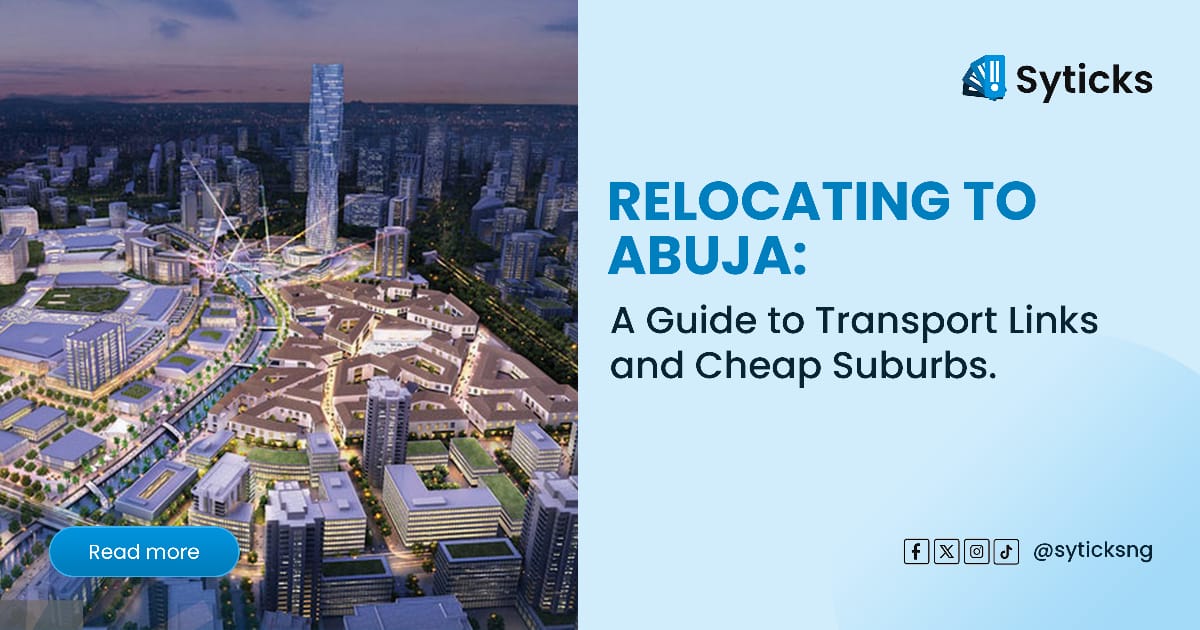
Relocating to the Federal Capital Territory (FCT) is often described as the “price of order.” In 2026, as Lagos becomes increasingly congested and other regional hubs face infrastructure challenges, Abuja remains the go-to destination for young professionals, civil servants, and entrepreneurs. However, the prestige of the capital comes with a high entry cost—if you don’t know where to look.
Moving to Abuja requires a strategic approach to two things: where you sleep and how you move. This guide breaks down the most affordable suburbs, the transport links that keep the city running, and how to use Syticks to simplify your relocation.
1. Choosing Your Base: The Best Cheap Suburbs in 2026
Abuja is a city of concentric circles. The closer you are to the “Phase 1” districts (Maitama, Asokoro, Wuse), the higher the rent. For those relocating on a budget, these suburbs offer the best balance of affordability and amenities:
Kubwa: The Fully-Functional Satellite Town
Kubwa is arguably the most popular destination for middle-class relocators. It isn’t just a suburb; it’s a self-sustaining city.
Rent: A standard two-bedroom flat in 2026 ranges from ₦1.2 million to ₦2.2 million yearly.
Pros: It has its own vibrant markets, hospitals, and schools. The train station and the expanded Kubwa Expressway make commuting relatively straightforward.
Lugbe: The Airport Road Corridor
Lugbe has exploded in popularity due to its proximity to the city center (about 15 minutes away).
Rent: You can find modern apartments in gated estates for ₦1.5 million to ₦3.5 million, though smaller “self-contain” units exist for much less.
Pros: It is perfect for those working in the Central Business District or the Airport. The infrastructure is rapidly improving with new shopping malls and tech hubs.
Karu and Jikwoyi: The Budget Seekers’ Haven
Located towards the boundary with Nasarawa State, these areas offer some of the lowest formal housing rates in the FCT.
Rent: One-bedroom units can still be found for ₦400,000 to ₦700,000 per year.
Pros: Massive savings on rent. However, you must brace for the “Nyanya” traffic during morning and evening rush hours.
2. Navigating the Capital: Transport Links
Abuja is designed for cars, but in 2026, the public transport network has become more organized.
The Abuja Light Rail: Connecting the Metro Station in the CBD to the Airport and Kubwa, the rail is a godsend for avoiding road traffic.
High-Capacity Buses (El-Rufai Buses): These serve major corridors like the Mararaba-Abuja and Kubwa-Abuja routes, offering the cheapest way to commute.
Ride-Hailing & Bolt/Uber: Plentiful in the city center but can be expensive for daily commuting. Budget roughly ₦4,000 to ₦7,000 daily if you rely solely on these.
3. The Relocator’s Secret Weapon: Syticks
Relocating is a logistical nightmare, but technology has finally caught up. Syticks has established itself as the best bus and hotel booking platform in Abuja, acting as a digital concierge for newcomers.
Booking Your Move
Whether you are moving from Lagos, Kano, or Port Harcourt, you need a reliable way to get to the capital. Syticks allows you to:
Compare Bus Fares: In 2026, a bus ticket from Lagos to Abuja averages ₦35,000 to ₦50,000. Syticks lets you see real-time prices from multiple operators, ensuring you don’t overpay during peak relocation seasons.
Select Your Seat: Long-haul journeys are draining. With Syticks, you can pick your seat in advance to ensure maximum comfort for the 10+ hour trip.
Your “Soft Landing” Stay
You shouldn’t commit to a yearly rent until you’ve seen the house in person. Most relocators need a “base camp” for their first week.
Verified Hotels: Syticks is the best platform for booking short-term stays in Abuja. Unlike global sites that sometimes list outdated photos, Syticks focuses on verified local listings.
Strategic Locations: You can use the app to find affordable hotels in areas like Gwarinpa or Utako, allowing you to scout houses in nearby suburbs like Dawaki or Jahi without spending a fortune on logistics.
Lagos to Abuja on a Budget: Your Smart Bus Booking Itinerary for Must-Attend Interviews
4. 2026 Relocation Budget Estimates
To help you plan, here is a snapshot of what it costs to move to Abuja in 2026:
Inter-state Bus Ticket (Lagos/PH to Abuja): ₦32,000 – ₦55,000 (Booked via Syticks).
Short-stay Hotel (Per Night): ₦25,000 – ₦45,000 for a decent mid-range room.
Initial Moving Logistics: ₦50,000 – ₦150,000 (depending on volume of goods).
Average Monthly Living (Single Adult): ₦350,000 – ₦600,000 (including transport and feeding).
5. Survival Tips for Newcomers
Inspect Before You Pay: Never pay for a house in Lugbe or Kubwa based on “WhatsApp photos.” Use a Syticks-booked hotel for a few days to conduct physical inspections.
Watch the “Nyanya” Axis: If you move to Karu or Jikwoyi, try to leave home by 5:45 AM. The traffic at the Nyanya bridge is legendary.
Use the Tech: Download the Syticks User App to manage all your transport and stay receipts in one place. It makes tracking your relocation expenses much easier.
Conclusion
Relocating to Abuja is a bold move that can redefine your career and lifestyle. While the city has a reputation for being expensive, suburbs like Kubwa and Lugbe prove that you can enjoy the “Abuja life” on a budget. By mastering the transport links and using Syticks—the best bus and hotel booking platform in Abuja—you turn a stressful move into a streamlined, professional transition.
Welcome to the Center of Unity. Your new chapter starts here.